
The Nordic Discount: Mid-Size Airports Beat the Big Hubs
In our dated fare snapshot, Portland ranked better to Nordic capitals than to Europe overall; San Francisco ranked worse. Compare your gateway before choosing an arrival city.
Best for: Anyone flying from a mid-size US airport who assumes they are badly placed for Europe
By Jon Miksis9 min read
This page contains affiliate links. If you sign up or book through them we may earn a commission, at no extra cost to you. It never changes what we recommend, or the order we recommend it in. Full disclosure.
Rank every US gateway twice — once by what Europe costs overall, once by what the five Nordic capitals cost — and some airports move a very long way.
Portland is 16th of 26 on Europe overall and 4th on the Nordics. San Francisco is 8th overall and 18th on the Nordics. Those two airports are 550 miles apart on the same coast, and they are at opposite ends of this table.
The gap, measured
| Gateway | Rank on Europe overall | Average rank on the Nordics | Gap |
|---|---|---|---|
| Portland | 16th | 4.2 | +11.8 |
| Nashville | 15th | 5.8 | +9.2 |
| Minneapolis | 13th | 5.6 | +7.4 |
| Raleigh | 10th | 5.2 | +4.8 |
| Seattle | 9th | 5.0 | +4.0 |
| New York | 1st | 6.6 | −5.6 |
| Miami | 4th | 13.2 | −9.2 |
| Los Angeles | 7th | 16.6 | −9.6 |
| San Francisco | 8th | 17.6 | −9.6 |
In this August 30, 2026 snapshot, the five airports shown above ranked better to the Nordic capitals than to Europe overall; the four other examples ranked worse. The result is specific to the selected cities and departure window, not a general rule for all airports of their size.
Latitude does not explain the ordering by itself
The table lets us compare fares with location, but not measure the effect of distance on price. A more northerly US airport did not automatically have the lower observed floor to a Nordic capital.
| Gateway | Latitude | Stockholm | Helsinki | Reykjavik |
|---|---|---|---|---|
| Portland | 46° N | $432 | $443 | $471 |
| Raleigh | 36° N | $436 | $465 | $466 |
| Nashville | 36° N | $445 | $495 | $457 |
| Denver | 40° N | $452 | $602 | $452 |
| Minneapolis | 45° N | $495 | $443 | $547 |
| Detroit | 42° N | $698 | $705 | $630 |
Raleigh and Nashville sit at 36° north — further south than Minneapolis and Detroit — and beat both to Stockholm. Raleigh reaches Stockholm for $436 against Minneapolis at $495 and Detroit at $698, despite sitting nine and six degrees further south respectively. Detroit is the sharpest case: a northern airport paying $262 more than a Carolina one to reach the same Nordic capital.
Denver and Detroit ranked relatively poorly on these Nordic destinations while their rankings on other city groups differed. That is a reason to compare your intended destination instead of relying on the overall gateway median.
The observations cannot assign a share of the fare difference to latitude, competition or any other cause.
What the carrier records add
Our separate carrier grid identifies named airline offers for November 8–14, 2026, collected across August 31 – September 1, 2026. That is useful for planning a search, but it is a different measurement from the city grid's flexible-date floors.
Icelandair had a median economy premium of $0 over the cheapest recorded carrier on its priced routes, and was cheapest outright on 93 of 150. SAS had a $12 median premium across 170 routes. Those medians compare each airline with its route's observed floor; they do not show why the airline chose its fare.
Coverage differs. Lufthansa appeared on 292 routes, British Airways on 491 and Turkish Airlines on 301 of the grid's 888 priced routes. None of those counts means that the same airline is available or cheapest on every route a reader might need.
For Seattle, the city-grid floor into Copenhagen was $448. The city record alone does not identify that ticket as a SAS nonstop. Check the actual itinerary before assigning its fare to an airline or cabin.
The regional comparison changes the shortlist
Compare the same gateways across another group of European cities and the ranking changes. This tests whether the Nordic result extends across the selected destinations; it does not isolate why the prices differ.
| Gateway | Overall | Nordics | Northern Europe | Southern Europe |
|---|---|---|---|---|
| Portland | 16th | 4.2 | 14.8 | 14.4 |
| Minneapolis | 13th | 5.6 | 18.8 | 19.8 |
| Nashville | 15th | 5.8 | 13.5 | 15.0 |
| Raleigh | 10th | 5.2 | 13.3 | 9.6 |
| Seattle | 9th | 5.0 | 4.0 | 10.4 |
| San Francisco | 8th | 17.6 | 8.3 | 8.2 |
| Los Angeles | 7th | 16.6 | 12.8 | 5.0 |
Northern Europe here means Berlin, Hamburg, Amsterdam and Dublin — cities at similar latitudes to Copenhagen, reached over broadly the same part of the map.
Minneapolis averaged a 5.6 rank on the Nordic capitals and 18.8 on the northern-Europe group in this snapshot. Portland averaged 4.2 and 14.8. A strong Nordic result did not extend evenly to Berlin, Hamburg, Amsterdam and Dublin.
The practical use is to keep the destination in the comparison. Do not assume that an airport which ranked well for Stockholm also offers an inexpensive fare to Amsterdam, even if both fit a similar trip plan.
Seattle ranked well across both groups, averaging 5.0 on the Nordics and 4.0 on northern Europe in the sample. It offers a different shortlist from Minneapolis or Portland; the table cannot attribute that difference to a particular airline or route geography.
Los Angeles averaged 5.0 on southern Europe and 16.6 on the Nordics; San Francisco ranked better in both the northern and southern groups than in the Nordic group. Neither overall gateway rank nor a regional label should replace a search for your own route.
Is the two-segment trip worth it?
The gap is large enough from some airports to make an intra-Europe connection worth pricing.
| Gateway | Cheapest Nordic | Rome | Gap | Barcelona | Gap |
|---|---|---|---|---|---|
| Minneapolis | $443 | $691 | $248 | $702 | $259 |
| Portland | $432 | $604 | $172 | $594 | $162 |
| Raleigh | $436 | $578 | $142 | $532 | $96 |
| Nashville | $445 | $578 | $133 | $694 | $249 |
The Minneapolis table shows a $248 difference between its observed Nordic floor and Rome floor. Those fares can come from different dates. It is not $248 already saved: price the transatlantic ticket and all onward legs for the same trip dates, including the return, before comparing with a through-ticket to Rome.
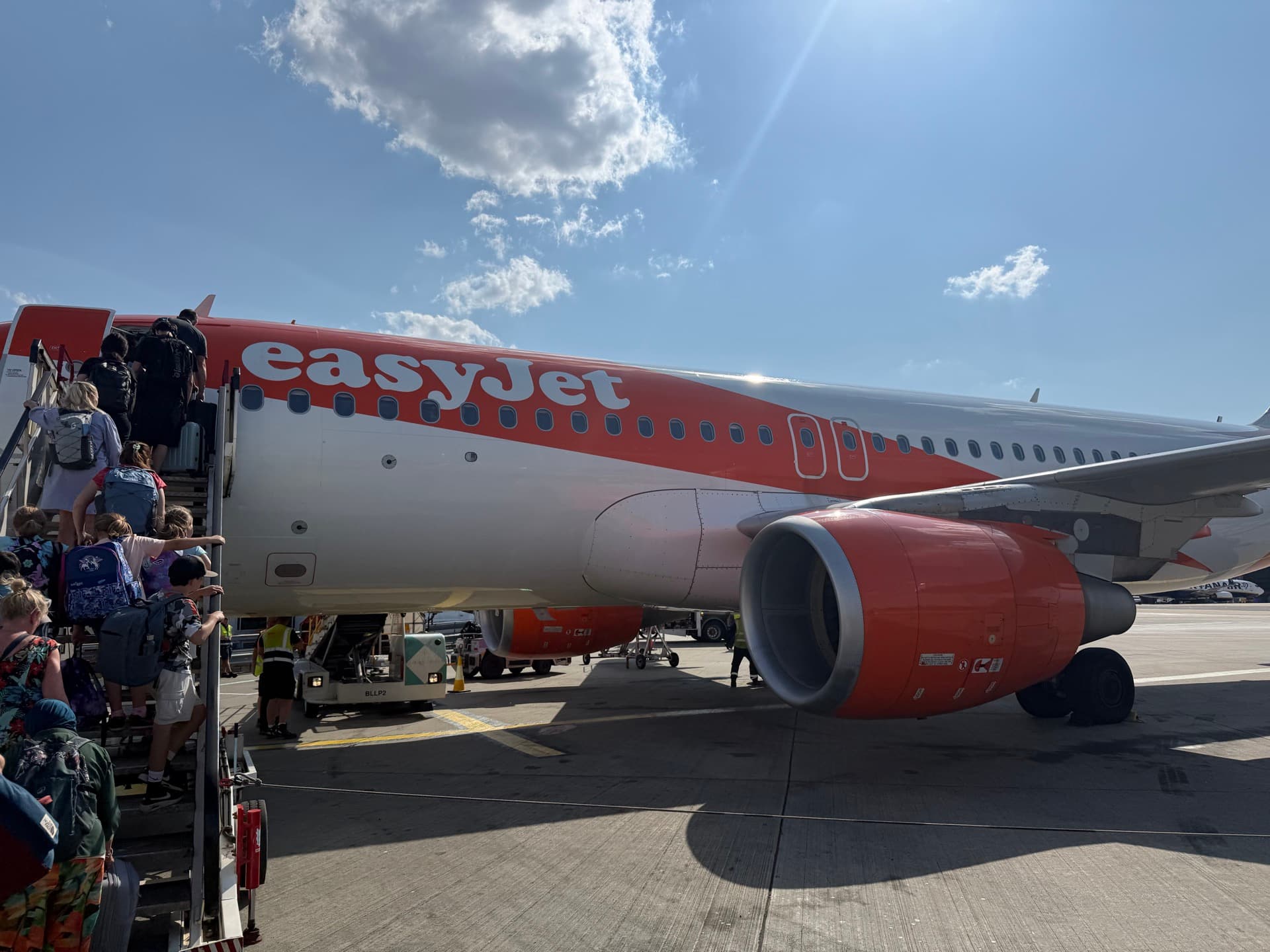
This is a real easyJet departure I took from Luton to Geneva in July 2026, boarding from the tarmac by airstairs. It illustrates a separate European flight, not an itinerary we have priced from one of these Nordic gateways.
Three costs need checking. Separate tickets do not automatically provide through-ticket connection protection, so plan for a delayed arrival. Check each airline's baggage allowance and total price rather than assuming both tickets include the same bags. Finally, allow for changing airports, collecting luggage, checking in again and any overnight needed to make the connection realistic.
The four examples in the table are candidates to price because their observed floors differed. We have not collected complete two-ticket itineraries or measured how often the arithmetic works. A modest fare saving may not justify the extra time and missed-connection exposure.
What to do with this
If your gateway appears near the top of this table, include Nordic arrivals in a flexible-destination search. The observed result supplies a shortlist, not a prediction that Scandinavia will be your cheapest option on another date.
Price the complete two-segment trip. From Raleigh the recorded Stockholm floor was $436 while Rome was $578. We have not priced the onward Stockholm–Rome legs. Add those actual quotes, baggage and connection costs before calling the alternative cheaper.
If you fly from New York, compare its own destinations. It had the lowest overall gateway median in this snapshot while its average Nordic rank was lower. Its recorded floors included Paris at $459, Rome at $461 and Reykjavik at $422. The national city floor is not a substitute for your departure airport's fare.
What a cheap Nordic arrival actually unlocks
An arrival in Scandinavia may also suit an onward European flight you already want to take. The photo below is one such journey, rather than evidence that the combined trip is cheaper.

I flew the Vagar–Copenhagen leg shown here in July 2023. If the Faroe Islands are your destination, a current search through Copenhagen is one option to investigate alongside complete itineraries from your US airport.
We have not priced that onward route in this grid. The observed US-to-Copenhagen fare therefore cannot establish the cheapest way to reach Vagar, a connection time or a total budget. Confirm the current schedule, whether all flights can be booked together and the price of the full return trip before selecting Copenhagen as your arrival point.
The exception worth knowing
Reykjavik had a different gateway ordering from Stockholm and Copenhagen in this snapshot.
| City | Cheapest gateway | Second | Third |
|---|---|---|---|
| Stockholm | $418 Seattle | $422 New York | $432 Portland |
| Copenhagen | $448 Seattle | $465 Minneapolis | $475 Nashville |
| Helsinki | $388 Washington DC | $390 Boston | $443 Minneapolis |
| Reykjavik | $422 New York | $432 Washington DC | $449 Boston |
Stockholm and Copenhagen are won by Pacific Northwest and mid-size airports. Reykjavik is won by New York, Washington and Boston — the East Coast, cleanly.
That ordering is useful without a causal story: the three lowest Reykjavik floors shown were from East Coast gateways. It does not establish why they were lower, or imply that those gateways will win for every week in the window.
Method, and its limits
Every fare was collected on August 30, 2026 from Google Flights, priced as a one-week round trip in economy for one adult, taking the cheapest available week in the six months after collection. Rankings compare gateways against each other on identical measurements.
What we do not know. Our city grid records fares, not routings, so it does not identify a cheap Nordic result as a nonstop or a connection. The carrier grid separately prices 26 US origins for November 8–14, 2026. A connecting itinerary was cheapest on 858 of 888 recorded routes. Its own observation dates and coverage apply; the Detroit guide and Dallas guide show airport-specific results. Neither snapshot identifies airline motives or proves permanent service absence when a carrier returned no offer.
The target refresh cadence is monthly. The date above identifies the published snapshot; a content review is not a new fare collection. A repeat collection could show whether these rankings persist, but this single one cannot.
Where to go from here
- Cheap flights from Seattle covers the strongest single case in depth.
- Stockholm, Copenhagen, Oslo and Helsinki each have a page with all 26 US gateways priced against them.
- The cheapest places to fly in Europe ranks the observed European destinations with the same date and scope limits.
- The best airlines to Europe compares the recorded airline fares and cabin evidence.
- Minneapolis shows that gateway's dated destination and carrier results.
- San Francisco is the counter-example — 8th of 26 overall and 18th to the Nordics.
- The best airports to connect through compares the recorded connecting itineraries and their limitations.
Common questions
- Which US airports are cheapest to Scandinavia?
- In our August 30, 2026 snapshot for the six months after collection, Seattle for Stockholm at $418 and Copenhagen at $448, Boston for Oslo at $422, and Washington for Helsinki at $388. But the more useful finding is relative: Portland ranks 16th of 26 US gateways to Europe overall and 4th to the Nordic capitals. Nashville, Minneapolis and Raleigh show the same gap.
- Is it about being further north?
- Latitude alone does not describe the ordering in our August 30, 2026 snapshot. Raleigh and Nashville were cheaper to Stockholm than Minneapolis and Detroit. The fares can identify that difference but cannot isolate the effects of geography, airline coverage or demand.
- Why are the Nordic capitals cheap from mid-size US airports?
- This snapshot does not establish a cause. Icelandair and SAS appear among the lower-priced carriers in our separate fixed-week searches, but those records do not reveal airline pricing motives or explain the city-grid rankings. Use the results to choose routes to check, not to predict what an airline will charge.
- Should I fly to Scandinavia even if I want to go somewhere else in Europe?
- Sometimes, yes. If you are starting from an airport with a large Nordic discount and are willing to add an intra-Europe flight, the total can undercut a direct routing to your actual destination. Price it as two segments before assuming the obvious route is cheaper.
- When are Nordic fares cheapest?
- The published city searches were collected on August 30, 2026 and cover departures in the following six months. It does not contain a full-year, date-by-date fare history and cannot identify an annual cheapest month. Compare the weeks you can travel and verify both the outward and return flights.

Written by
Jon Miksis
Jon Miksis has run travel businesses since 2017 and spends 3–6 months a year traveling, two to three of them in Europe. He has taken 250+ flights and booked every one himself, and regularly flies Boston to Europe for under $300 round trip. Every “Flown” review is from his own seat.
Join the Club, free
One email a week: the Europe fares worth acting on, the new transatlantic routes, and first look at the tools. No spam, unsubscribe anytime.